
Let's consider the following sample:
import React, {Component} from 'react';

class B extends Component {
  render() {
    console.log(`Render runs with ${this.props.paramA}`);
    return (<div>{this.props.paramA}</div> );
  }
}

class App extends Component {

  constructor() {
    super();
    this.state = {paramA: 'asd'};
  }

  handleChange(event) {
    this.setState({paramA: event.target.value});
  }

  render() {
    return (<div>
      <input value={this.state.paramA} onChange={e => this.handleChange(e)}/>
      <label>
      <B paramA={this.state.paramA}></B>
      </label>
    </div>);
  }
}
Here's the gif of how it works.
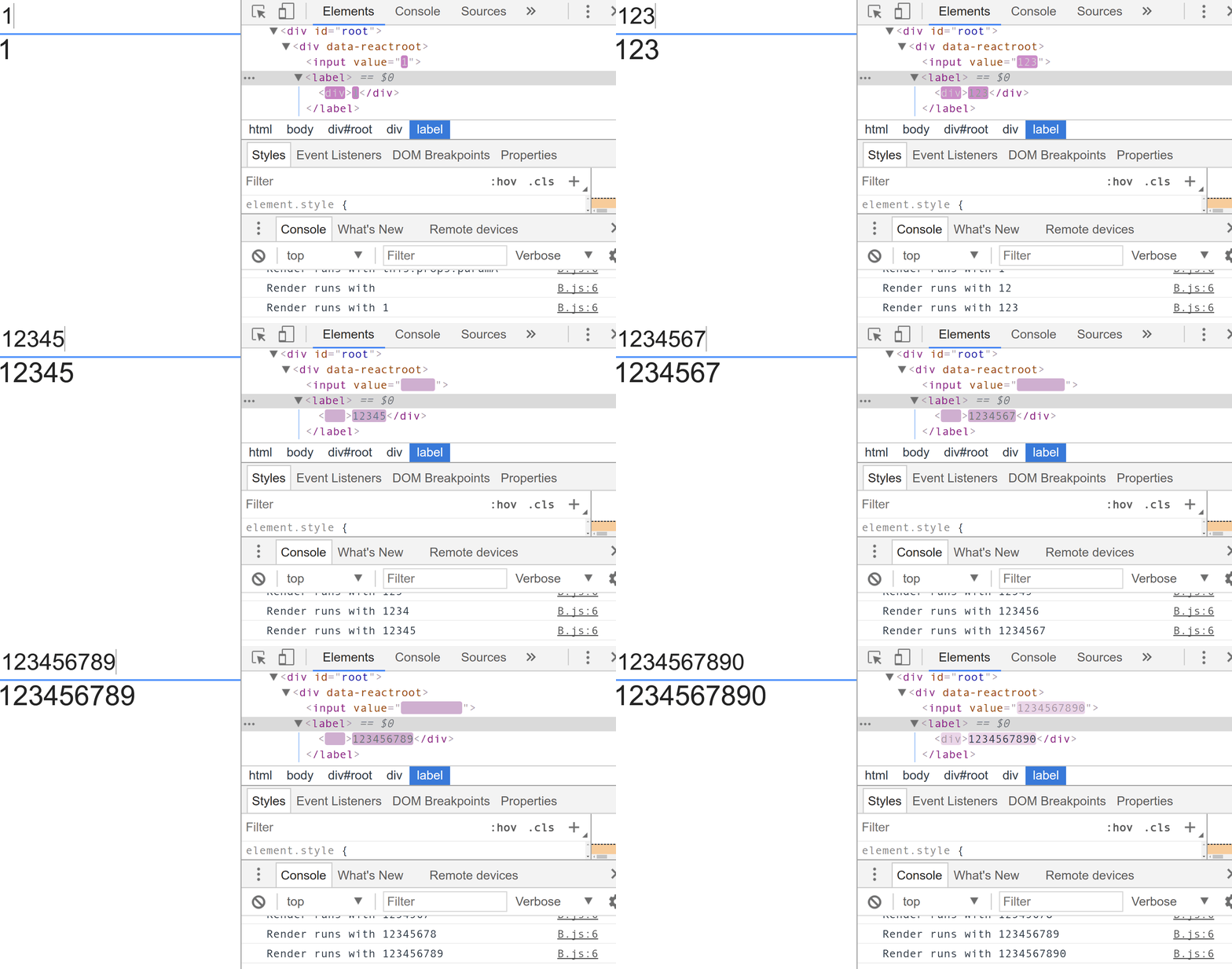
If you noted, in order to update the changes from properties, react needs to evaluate "render" method. That causes the whole component to update instead of its small part that really changed (check the gif, the div element blinks in chrome developer tools):
TL;DR According to react philosophy,apps should be written in a way to have as many dummy components as possible. That means we have to pass properties a few level down sometimes (other time we can use e.g. redux), which leads to a lot of render methods that evaluate every time the property of top level component changes. With all that being said I often see in the real life react application that a whole root div blinks when e.g. users types something into input. Well even if it's a browser "lag" I don't really like the idea that react reevaluates all components (meaning running their render method) when a component needs to update only its small part.
The question: Am I doing something wrong? Is there a way to implement react component so they update only things that changed?