Sometimes, I see
try {

} catch(Throwable e) {

}
And sometimes
try {

} catch(Exception e) {

}
What is the difference?
Sometimes, I see
try {
} catch(Throwable e) {
}
And sometimes
try {
} catch(Exception e) {
}
What is the difference?
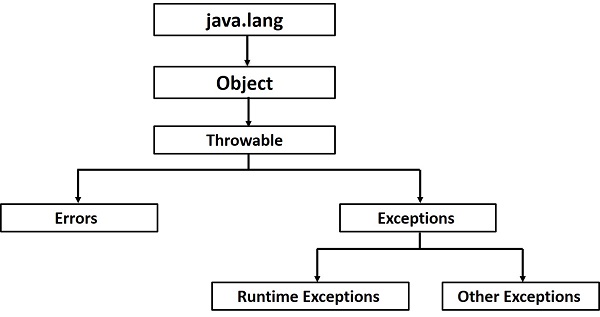
By catching Throwable it includes things that subclass Error. You should generally not do that, except perhaps at the very highest "catch all" level of a thread where you want to log or otherwise handle absolutely everything that can go wrong. It would be more typical in a framework type application (for example an application server or a testing framework) where it can be running unknown code and should not be affected by anything that goes wrong with that code, as much as possible.
The first one catches all subclasses of Throwable (this includes Exception and Error), the second one catches all subclasses of Exception.
Error is programmatically unrecoverable in any way and is usually not to be caught, except for logging purposes (which passes it through again). Exception is programmatically recoverable. Its subclass RuntimeException indicates a programming error and is usually not to be caught as well.
Throwable catches really everything even ThreadDeath which gets thrown by default to stop a thread from the now deprecated Thread.stop() method. So by catching Throwable you can be sure that you'll never leave the try block without at least going through your catch block, but you should be prepared to also handle OutOfMemoryError and InternalError or StackOverflowError.
Catching Throwable is most useful for outer server loops that delegate all sorts of requests to outside code but may itself never terminate to keep the service alive.
I have seen people use Throwable to catch some errors that might happen due to infra failure/ non availability.